
Persephone: Claiming the Throne of the Underworld
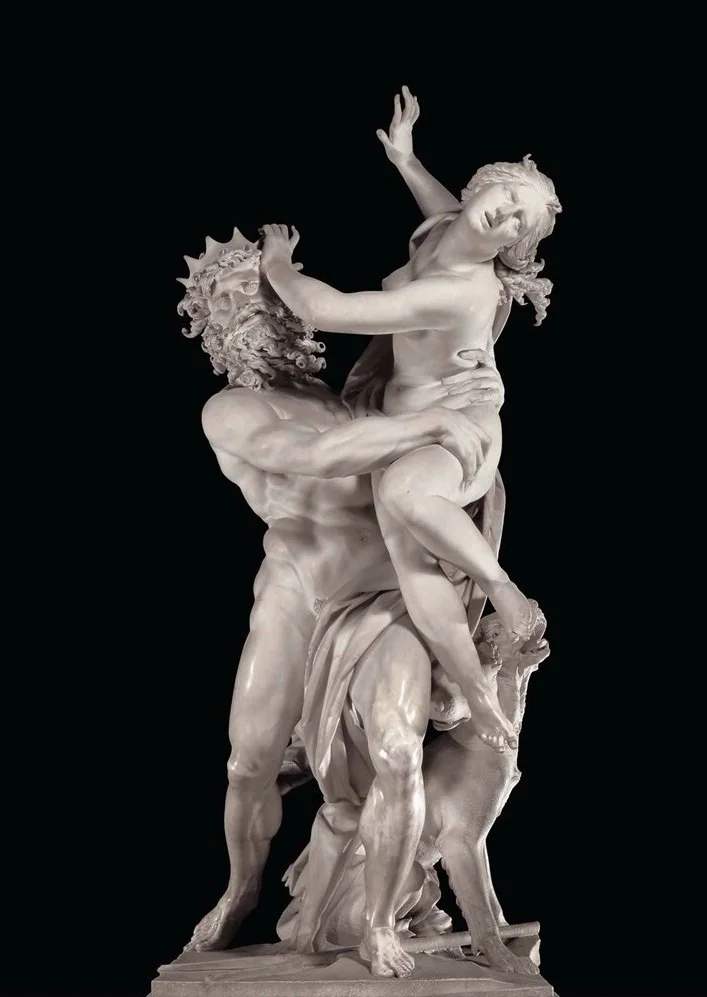
The Kidnapping of Proserpina (1621–1622) by Gian Lorenzo Bernini, showing Proserpina (Roman name for Persephone) being taken to the underworld by Pluto (Roman name for Hades). Galleria Borghese, Rome
In my new song, Persephone, I reimagine the myth of Persephone, Demeter, and Hades as a journey through grief, courage, and sovereignty.
The lyrics follow a search party descending into the underworld to find Persephone, whose mother’s sorrow has “turned the land to stone” above.
“Descend, through darkness, we pray / Passageways carved in mother’s grief / Hecate shows the way, she is our only hope”
In Greek mythology, Demeter, goddess of the harvest, brings life to the earth. When her daughter Persephone is taken to the underworld, Demeter’s grief halts growth, creating the barren winter — the origin of the seasons. Hecate, goddess of magic and crossroads, guides mortals between worlds, bridging light and shadow. This story is told in the Homeric Hymn to Demeter, an ancient Greek poem that preserves the earliest full account of the myth.
Into the Underworld
“Calling her name in the dark / Where have you gone Persephone? / Demeter weeps in grief, she’s turned the land to stone / And we may never return again”
Through the search party, the song captures the courage needed to face loss, grief, and uncertainty. Persephone’s absence freezes life above, while the descent into the underworld mirrors a journey through fear, the unknown, and ultimately toward revelation.
Trials and Guardians
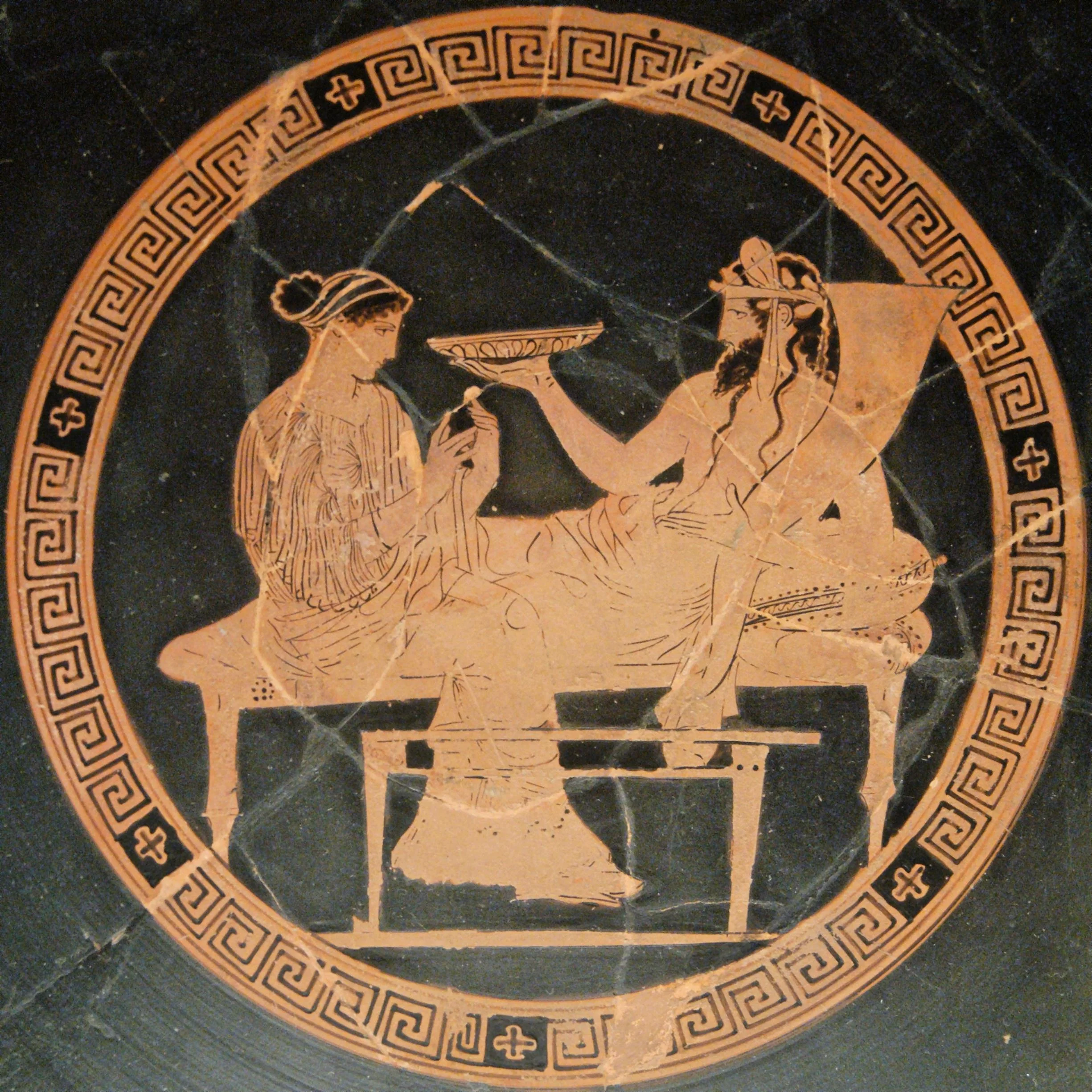
A circular depiction of Persephone and Hades on a drinking cup from Vulci, c. 440–430 BCE. (British Museum, London)
“We pay Charon’s toll, the silver coin / And we cross the mighty river Styx / To the land of the dead / It is our only hope
There, Cerberus guards the gate / But we tame him with love and trust / To enter Hades’ realm, the ancient underworld / And we may never return again”
Crossing the Styx and confronting Cerberus, the three-headed guardian, symbolizes the obstacles we must face to reclaim what seems lost — a trial of courage, trust, and empathy. Cerberus embodies the boundary between life and death, as well as our inner fears and struggles when confronting loss, mortality, or the unknown. Through love and trust, we find the means to pass, showing that empathy and bravery can overcome even the most daunting challenges.
“Hades waits below / He wears a crown of ash and flame / His Queen is veiled and throned / What have you done to Persephone?”
Initially, the search party fears something has been done to her, assuming she is lost or victimized. But as they descend, they discover that Persephone is no mere captive. She has claimed her throne in the underworld, commanding shadow and light, life and death.
Persephone Reclaimed
“From her throne she rose / ‘I am Queen Persephone / I was never lost / I chose this throne and command the night’”
Her ascent is radical: Persephone rules the underworld and its cycles of death and renewal on her own terms. Her throne is neither gift nor prison—it is her domain by choice, a testament to autonomy, transformation, and mastery over darkness.
The Descent of the Goddess & Eleusinian Mysteries
Persephone’s story is part of a universal motif: the descent of the goddess. Across cultures, female deities descend into darkness or death — from Inanna in Sumerian myth to Isis in Egypt — descend into darkness or death, symbolizing death and rebirth, inner transformation, and life’s cycles.
The Eleusinian Mysteries in ancient Greece revolved around Persephone and Demeter, involving secret initiations promising insight into life, death, and renewal. Participants ritually reenacted the descent and return, emphasizing transformation and the sacred feminine.
Persephone’s myth shaped religious rites, art, literature, and philosophy. Her journey from loss to sovereignty represents the transformative potential within darkness, showing that courage, choice, and empowerment are timeless human lessons.
“Descend, through darkness, we pray… / From her throne she rose / I was never lost / I chose this throne and command the night”
Her story reminds us: darkness is not absence but a realm for courage, transformation, and reclaiming power — a truth that has echoed across cultures for millennia.